Universities & Colleges in Minnesota
Home to one of the nation's premier Big Ten research universities and a constellation of elite liberal arts colleges, Minnesota is a world-class destination for higher education.
Why Minnesota Excels in Higher Education
Minnesota has invested in education with remarkable consistency for over 160 years. The result is an academic ecosystem of extraordinary depth, diversity, and quality.
Minnesota's higher education landscape is among the most distinguished in the United States. The state is home to 31 two-year colleges and more than 100 accredited degree-granting institutions, serving over 350,000 students from every U.S. state and more than 130 countries. The centerpiece of this ecosystem is the University of Minnesota system, whose flagship Twin Cities campus consistently ranks among the top 30 research universities in the world. But the full picture of Minnesota higher education is considerably richer than any single institution.
What distinguishes Minnesota's academic landscape is its exceptional collection of small liberal arts colleges. The Northfield corridor — a single small city 40 miles south of the Twin Cities — is home to both Carleton College and St. Olaf College, two institutions that perennially rank among the finest liberal arts colleges in the nation. In Saint Paul, Macalester College offers a uniquely cosmopolitan liberal arts education within walking distance of some of the city's finest neighborhoods.
The quality of Minnesota's higher education is not accidental. The state has historically maintained strong per-capita higher education funding, attracting and retaining world-class faculty. The proximity of the University of Minnesota's research enterprise to the Twin Cities' major corporations — 3M, Target, Best Buy, Medtronic, UnitedHealth Group, General Mills — creates an extraordinarily productive ecosystem of academic-industry collaboration, technology transfer, and entrepreneurship that benefits students and the broader economy alike.

University of Minnesota Twin Cities
The University of Minnesota Twin Cities is the flagship campus of the University of Minnesota system and one of the most comprehensive research universities in the United States. Founded in 1851 — seven years before Minnesota achieved statehood — the university has grown from a small territorial institution into a global center of knowledge creation, professional training, and public service that touches virtually every aspect of life in the state and beyond.
The Twin Cities campus sprawls across the banks of the Mississippi River in Minneapolis and Saint Paul, encompassing approximately 2,730 acres, 259 major buildings, and a vibrant community of over 51,000 students, 4,000 faculty, and 16,000 staff. As a member of the prestigious Association of American Universities and the Big Ten Athletic Conference, the university operates at the forefront of American higher education in virtually every discipline.
The university's academic structure is organized into 19 colleges and schools offering over 400 degree programs at the undergraduate, graduate, and professional levels. The College of Science and Engineering is nationally recognized for programs in aerospace, biomedical, electrical, and chemical engineering. The Carlson School of Management is among the top business schools in the Midwest. The Medical School is affiliated with a network of teaching hospitals forming one of the most comprehensive academic medical centers in the nation — M Health Fairview.
🔬 Research Impact
The University of Minnesota has been the site of historic discoveries: the first practical open-heart surgery (1952), the first bone marrow transplant (1968), the isolation of Vitamin K, and the development of MRSA-resistant compounds. It receives over $1 billion in sponsored research annually.
The research enterprise at the University of Minnesota is extraordinary in both its volume and breadth. The university receives over $1 billion in sponsored research funding annually. The campus's arts scene includes Northrop Auditorium hosting touring Broadway productions and the Weisman Art Museum — a spectacular Frank Gehry-designed building perched on the riverbank that has become an architectural landmark in its own right. The university's sports teams, the Minnesota Golden Gophers, compete in the Big Ten Conference in 21 sports, with football played at the on-campus Huntington Bank Stadium.

Student Life & the University Experience
Studying at a Minnesota university is an experience that goes far beyond the classroom. The state's higher education institutions are embedded in communities that genuinely value intellectual life, artistic expression, and civic engagement — creating a student experience that is rich in opportunity and deeply connected to the larger world.
At the University of Minnesota, over 800 student organizations operate on campus, spanning academic honor societies, cultural associations, political groups, sports clubs, service organizations, and creative collectives. Housing options range from traditional dormitories to residential college communities organized around academic themes — the Program in Liberal Education (ISLE), for example, brings together students interested in interdisciplinary humanistic inquiry into a dedicated residential learning community.
The Twin Cities location is one of the University of Minnesota's most significant advantages. Unlike many flagship state universities isolated in small college towns, the U of M is embedded in a major metropolitan area that provides unparalleled internship, employment, cultural, and social opportunities. Students can intern at 3M, Target, Medtronic, or General Mills while still enrolled. The Minneapolis light rail Green Line runs directly between the university's East Bank campus and downtown Minneapolis, making the city's full cultural and culinary offerings easily accessible without a car.
Minnesota's liberal arts colleges offer a more intimate counterpoint to the research university experience. At Carleton and St. Olaf in Northfield, the small college community creates an intensity of intellectual engagement — frequent faculty-student interaction, genuine shared intellectual projects, small seminars rather than large lectures — that many students find transformative.
🌍 Macalester's Global Focus
Macalester College consistently ranks #1 or #2 in the U.S. for international student enrollment as a percentage of total enrollment. Approximately 21% of its student body comes from outside the United States, representing over 90 countries.
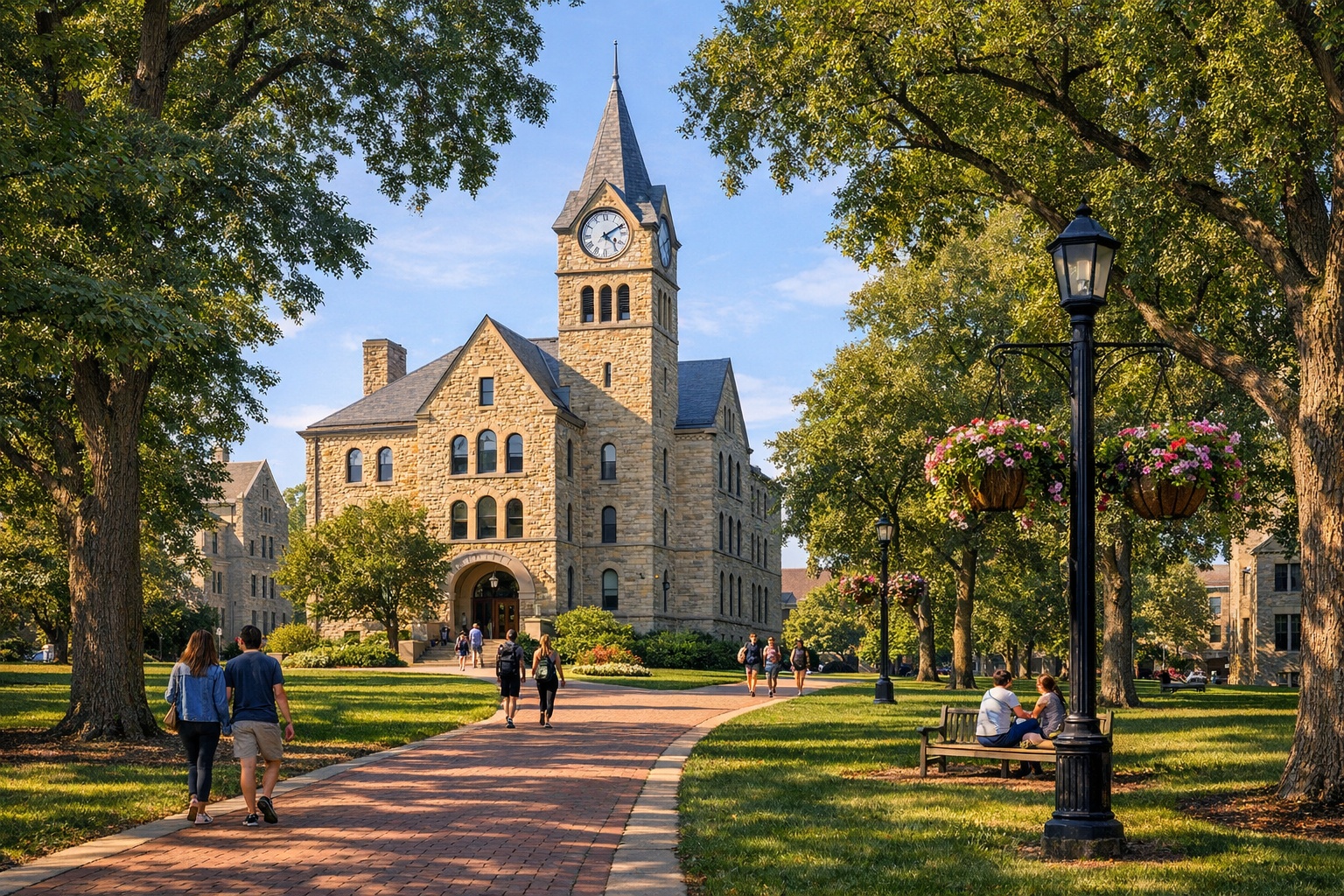
Northfield: Two Great Colleges in One Small City
The small city of Northfield, Minnesota (population approximately 20,000), located 40 miles south of the Twin Cities, hosts a concentration of academic excellence that is virtually unprecedented for a community of its size anywhere in the United States. Two of the most highly regarded liberal arts colleges in the nation — Carleton College and St. Olaf College — sit just a mile apart on opposite sides of the Cannon River, collectively enrolling around 5,000 undergraduates.
Carleton College
Founded in 1866 and now a fully secular institution, Carleton College is consistently ranked among the top three or four liberal arts colleges in the United States. What sets Carleton apart is a distinctive combination of academic rigor, intellectual culture, and institutional personality that has made it one of the most sought-after colleges for serious students from across the country and around the world.
Carleton's academic calendar operates on a three-term trimester system rather than the standard semester model — a structure that creates an intense, focused learning experience. Students take only three courses per 10-week term. The average class enrollment is 17 students. Every course taught at Carleton is taught by a full professor, never by a graduate student teaching assistant. Carleton's 955-acre campus includes the Cowling Arboretum — 800 acres of restored prairie, oak savanna, river gorge, and wetland that functions simultaneously as a living laboratory for ecological research and as one of the finest natural recreation areas in southern Minnesota.
St. Olaf College
One mile north of Carleton, St. Olaf College is a Lutheran liberal arts institution founded in 1874 by Norwegian-American immigrants, with approximately 3,000 students. St. Olaf's music programs are among the most celebrated in the country — five major choral groups, two orchestras, three bands, and a jazz ensemble. The St. Olaf Choir, founded in 1912, is one of the most acclaimed choral ensembles in the world. The college's annual Christmas Festival — broadcast nationally on PBS — is perhaps the most widely heard American academic musical event of any kind. A distinctive global studies curriculum requires all students to study abroad at some point during their four years.
Macalester College: Global Education in an Urban Setting
In a leafy Saint Paul neighborhood just a few blocks from Grand Avenue and the Cathedral of Saint Paul, Macalester College offers one of the most distinctively cosmopolitan liberal arts educations in the United States. Founded in 1874 by the Presbyterian minister Edward Duffield Neill, Macalester has grown from a small denominational college into a fully secular institution with a global reputation built on three institutional commitments: internationalism, multiculturalism, and service to society.
Macalester's international identity is not merely rhetorical. The college has the highest percentage of international students of any highly selective liberal arts college in the United States — approximately 21% of its approximately 2,200 undergraduates come from outside the country, representing over 90 nations. The diversity of the student body creates a genuinely cross-cultural intellectual environment that is difficult to replicate at more isolated institutions. Classroom discussions routinely include perspectives from students who grew up in Ghana, South Korea, Brazil, Germany, and Somalia.
The college's academic strengths are broad but particularly notable in the social sciences, international studies, economics, and the natural sciences. Kofi Annan — the Ghanaian diplomat who served as Secretary-General of the United Nations from 1997 to 2006 and was awarded the Nobel Peace Prize in 2001 — graduated from Macalester in 1961. Walter Mondale, former U.S. Vice President and Democratic presidential nominee, is among the college's most distinguished American alumni.
Macalester's Saint Paul location is a distinctive asset. The college's urban setting gives students immediate access to a major metropolitan area's full range of cultural, civic, and professional resources — internship opportunities with nonprofits, government agencies, hospitals, and corporations; the rich dining and arts scene of Grand Avenue and the broader Twin Cities; and the diverse community life of the Summit Hill neighborhood, one of Saint Paul's most vibrant residential areas.
Other Noteworthy Minnesota Institutions
Beyond the flagship institutions, Minnesota's higher education ecosystem includes many excellent colleges and universities serving a wide range of student needs and interests.
University of St. Thomas
Minnesota's largest private university, with campuses in Saint Paul and Minneapolis, the University of St. Thomas is a Catholic institution offering over 100 undergraduate programs and a highly regarded business school — the Opus College of Business — consistently ranked among the top business schools in the Midwest. The law school and engineering programs are equally well-regarded. St. Thomas enrolls approximately 10,000 students and maintains strong ties to the Twin Cities business community.
Gustavus Adolphus College
Located in the small city of Saint Peter, 70 miles southwest of Minneapolis, Gustavus Adolphus College is a Lutheran liberal arts college known for excellent programs in the sciences, music, and international education. The college's annual Nobel Conference — established in 1965 and held each October — brings Nobel laureates and leading scholars to campus for a public forum on a major scientific or intellectual question, making it one of the most prestigious academic events in the Midwest.
St. Catherine University
The nation's largest Catholic women's university, St. Catherine University in Saint Paul offers an outstanding range of undergraduate and graduate programs with particular strength in health sciences, nursing, social work, education, and the liberal arts. Founded by the Sisters of St. Joseph of Carondelet in 1905, St. Kate's has a long history of empowering women through education, and its graduates occupy leadership positions in healthcare, business, government, and the nonprofit sector throughout the Twin Cities and beyond.
Hamline University
The oldest university in Minnesota (founded 1854) and the state's first coeducational institution, Hamline University in Saint Paul is a United Methodist-affiliated liberal arts university offering undergraduate, graduate, and law programs. Hamline's location in the Midway neighborhood of Saint Paul places it centrally between the two downtowns. The university is known for strong programs in education, social work, business, and public administration.
Augsburg University
Situated in the heart of Minneapolis's Cedar-Riverside neighborhood — known as the "Little Mogadishu" of North America — Augsburg University is a Lutheran-affiliated institution distinguished by its commitment to serving first-generation college students, students of color, and working adults. Augsburg's social work, education, nursing, and business programs are highly regarded, and the university's urban location creates exceptional experiential learning opportunities in community health, social services, and civic engagement.
Minnesota State Colleges
The Minnesota State Colleges and Universities (MnSCU) system comprises 30 state universities and community and technical colleges serving over 340,000 students across the state. Institutions like Minnesota State University Mankato, St. Cloud State University, and Winona State University provide accessible, career-focused education throughout greater Minnesota. The system's technical colleges offer exceptional two-year programs in healthcare, manufacturing, construction, and information technology.
Living & Studying in Minnesota
Beyond campus, Minnesota offers students an extraordinary quality of life — affordable, safe, culturally rich, and brimming with outdoor adventure.
Cost of Living
Compared to major coastal metropolitan areas, the Twin Cities offer a remarkably affordable quality of life for students. Average off-campus apartment rents in student-friendly neighborhoods near the University of Minnesota — Dinkytown, Stadium Village, Como — range from $700–$1,200 per month for a private room in a shared apartment. Groceries, transportation, and dining out are all considerably cheaper than equivalent costs in New York, Boston, Los Angeles, or San Francisco.
Safety and Quality of Life
Minnesota consistently ranks among the safest and most livable states in the United States. The Twin Cities metro scores highly on measures of public health, educational attainment, economic mobility, and civic participation. Minneapolis has been recognized as one of the best park systems in any American city, with over 6,800 acres of parkland and 22 lakes within the city limits.
Career Opportunities
Minnesota's economy is one of the most robust and diversified in the Midwest. The state is home to an unusually high concentration of Fortune 500 companies: Target, UnitedHealth Group, 3M, Medtronic, General Mills, Best Buy, Ameriprise Financial, US Bancorp, and Xcel Energy all have their headquarters in the Twin Cities. This corporate density creates exceptional internship and post-graduation employment opportunities for students in business, engineering, healthcare, information technology, and finance.
The Winter Question
Any honest discussion of student life in Minnesota must address the winters. They are cold — genuinely, impressively cold. Average January temperatures in Minneapolis hover around 13°F (−10.5°C). But Minnesotans have developed a remarkably sophisticated culture of winter coping and winter enjoyment. The downtown Minneapolis Skyway system protects students from the worst cold during daily commutes. And the genuine beauty of a Minnesota winter — the crystalline clarity of extreme cold air, the brilliance of snow-covered landscapes, the magic of northern lights visible even from city suburbs — makes the season one that many out-of-state students come to genuinely cherish.
| Institution | Location | Type | Enrollment | Notable For |
|---|---|---|---|---|
| University of Minnesota Twin Cities | Minneapolis/Saint Paul | Public Research (Big Ten) | ~51,000 | Research, Medicine, Engineering |
| Carleton College | Northfield | Private Liberal Arts | ~2,100 | Top-ranked academics, Arboretum |
| St. Olaf College | Northfield | Private Liberal Arts (Lutheran) | ~3,000 | Music, Sciences, Study Abroad |
| Macalester College | Saint Paul | Private Liberal Arts | ~2,200 | International Students, Global Studies |
| University of St. Thomas | Saint Paul/Minneapolis | Private University (Catholic) | ~10,000 | Business, Law, Engineering |
| Gustavus Adolphus College | Saint Peter | Private Liberal Arts (Lutheran) | ~2,200 | Nobel Conference, Sciences |
| St. Catherine University | Saint Paul | Private Women's University | ~4,500 | Healthcare, Nursing, Education |
| Hamline University | Saint Paul | Private University | ~4,500 | Law, Social Work, Education |
| Augsburg University | Minneapolis | Private University (Lutheran) | ~3,400 | Diversity, Social Work, Nursing |
| Minnesota State Mankato | Mankato | Public University | ~15,000 | Business, Engineering, Education |